How it works, from enquiry to handover
We keep it simple. Here is exactly what happens from the moment you get in touch to the day your system is generating clean energy.
Quick answer
It starts with a short enquiry by phone or form. An MCS-certified partner then surveys your home, designs your system, handles grid paperwork and gives you a written, no-obligation quote. If you go ahead, they install, commission and hand over your system with its guarantees, and remain your point of aftercare.
Last updated: Reviewed by the Scottish Energy Efficiency team
- Installed through our MCS-certified partners
- Interest-free credit up to £30,000, subject to status.
- Covering homes across all of Scotland
How does the process work, step by step?
- 1
Enquiry
You tell us what you are interested in — solar, battery, heat pump, or a combination — and your postcode. No obligation.
- 2
No-obligation survey
An MCS-certified installer partner visits your property to assess roof orientation, shading, electrical setup, and insulation.
- 3
Design and written quote
You receive a system design with a written, no-obligation quote for your roof and location.
- 4
DNO notification
Your installer partner handles G98 (up to 3.68kW, notified within 28 days) or G99 (above 3.68kW, prior approval) with SP Energy Networks or SSEN.
- 5
Building warrant
Where required under Scottish building standards, your installer partner handles the building warrant application through eBuildingStandards.
- 6
Installation
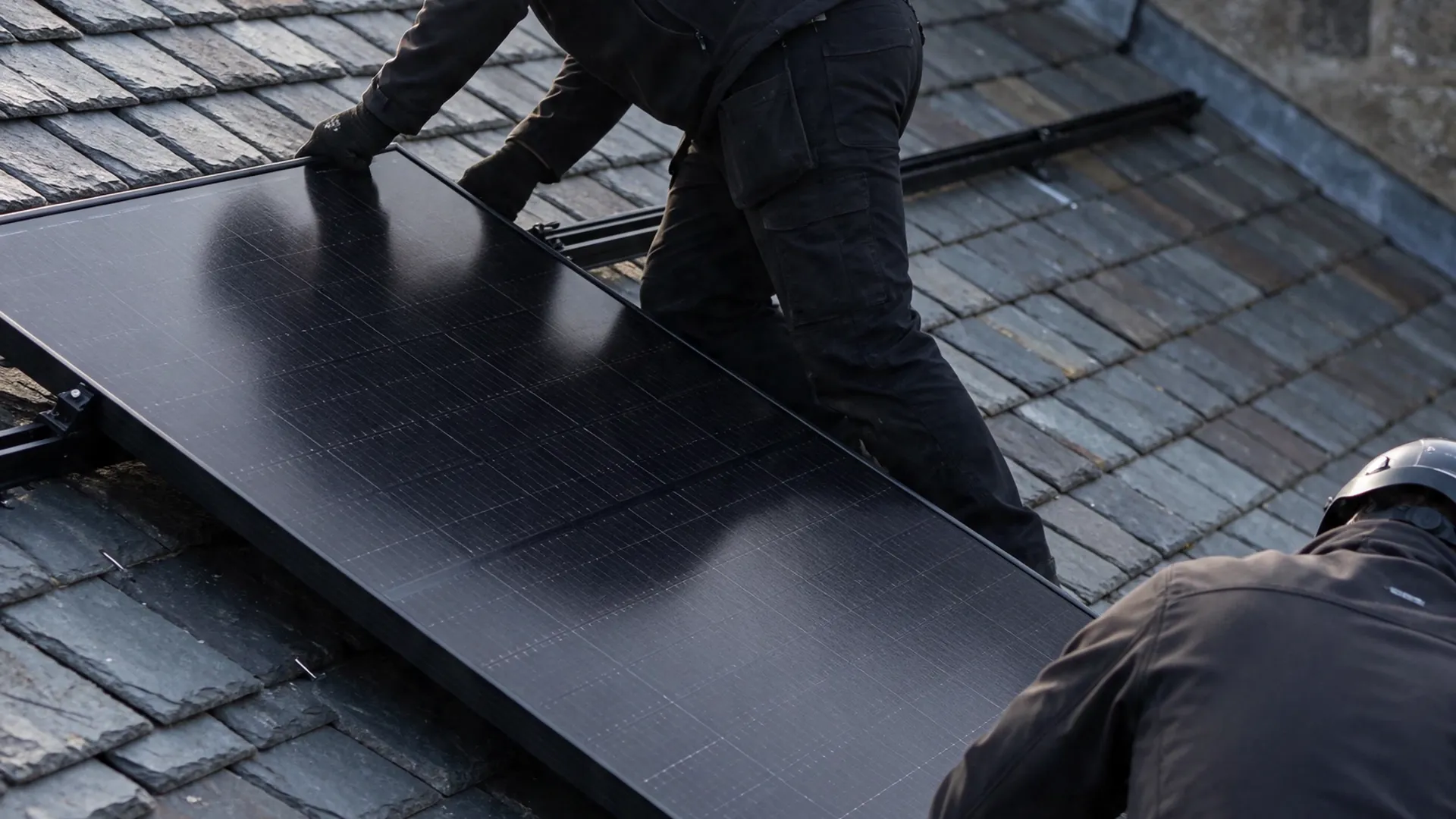
Your MCS-certified installer partner fits the system. Most solar installations take 1-2 days. Heat pumps may take 2-3 days.
- 7
Commissioning & handover
System commissioned and tested. You receive a handover pack with MCS certificate, manufacturer warranties, performance monitoring app, and all documentation.
- 8
Aftercare
Ongoing support, system monitoring, and warranty backing. If anything needs attention, your installer partner is a phone call away.
What do we handle for you?
Your installer partner handles DNO notification, building warrant applications, conservation and listed building checks, MCS certification, warranty registration, and SEG guidance. You do not have to deal with the network operator or council yourself.
- DNO notification (G98 within 28 days, or G99 prior approval) with SP Energy Networks or SSEN
- Building warrant applications through Scottish eBuildingStandards where required
- Conservation area and listed building consent checks
- MCS certification and all compliance documentation
- Manufacturer warranty registration
- SEG registration guidance for your energy supplier
For a broader look at solar costs and what you might save across different system sizes, our sister site has a detailed breakdown. If you are weighing up interest-free credit versus paying outright, that site covers the finance side in depth. Part of the Scottish Energy Efficiency network.
Key facts for Scotland
- Solar panels generate electricity from daylight rather than heat, so they work in the Scottish climate, with the highest output from spring to late summer.
- Roof-mounted solar on most homes in Scotland is permitted development, but listed buildings and some conservation areas need consent, so check with your local council.
- Your installer partner notifies the local network operator: SP Energy Networks in central and southern Scotland, or Scottish and Southern Electricity Networks in the north.
- Under the Smart Export Guarantee, larger electricity suppliers must offer a tariff for the electricity you export, with rates set by each supplier.
- Battery storage lets you use daytime solar generation in the evening, when household demand is usually highest.
Last updated:
What should you read next?
How do I get a written, no-obligation quote for my home?
Tell us a little about your property and an MCS-certified installer partner will arrange a survey. Interest-free credit up to £30,000, subject to status.